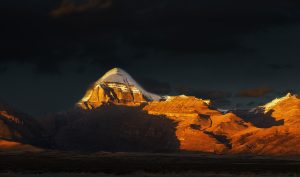

Thousands of years ago, the Qinghai–Tibet Plateau—known as the “Roof of the World”—was already full of life. Archaeologists have uncovered the remarkable Karuo Culture (about 5,000 years ago). These early Tibetans cultivated highland barley, domesticated livestock, and even traded with communities in the Yellow River basin. Imagine this scene: ancestors wrapped in animal skins exchanging turquoise for silk.
Later came the rise of the Zhangzhung Kingdom (from the 4th century BCE to the 7th century CE), a mysterious ancient state in western Tibet. They created a prototype of the Tibetan script and worshipped mountain deities and nature through the Bon religion. It can be said that this period formed the “primitive gene bank” of Tibetan culture.
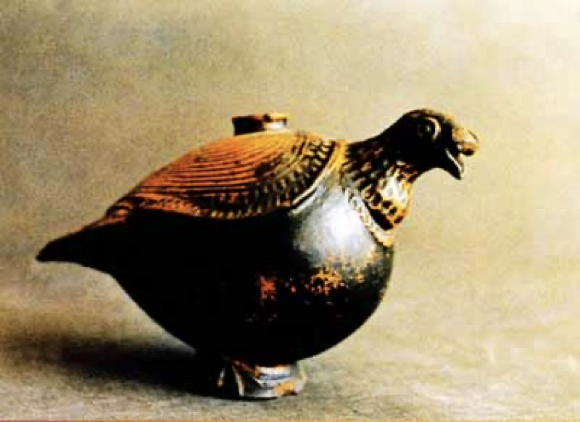
Figure: Pottery Unearthed in Tibet
Then appeared Songtsen Gampo (617–650), the “Conqueror of the Snowland.” He unified the tribes of the plateau and established the Tubo (Tibetan) Empire—one of the highest-altitude superpowers of the ancient world. He married two princesses: Princess Wencheng of the Tang dynasty and Princess Bhrikuti of Nepal. They brought Buddhism to Tibet, and the Tibetan script was formally created to translate Buddhist scriptures. From that point on, Buddhism merged with indigenous Bon beliefs, binding the Tibetan people across mountains and valleys and giving rise to distinctive Tibetan Buddhism. The script created in the 7th century preserved epics such as The Epic of King Gesar—longer than The Iliad and The Odyssey combined.
After the collapse of the Tubo Empire in the 9th century, Tibet formally became part of China’s administrative system during the Yuan dynasty in the 13th century. Today, more than seven million Tibetans live in Tibet, Qinghai, Sichuan, and surrounding regions. They possess genetic adaptations to high altitudes, including a stronger ability for blood to carry oxygen. From butter sculptures to short-video dances, Tibetan culture remains vibrant as it embraces modern life. The Tibetan people are not merely a symbol of “mystery,” but a living testament to ancient migrations, empire-building, and spiritual innovation. Remember—this is a civilization whose epic has been flying high for 5,000 years.